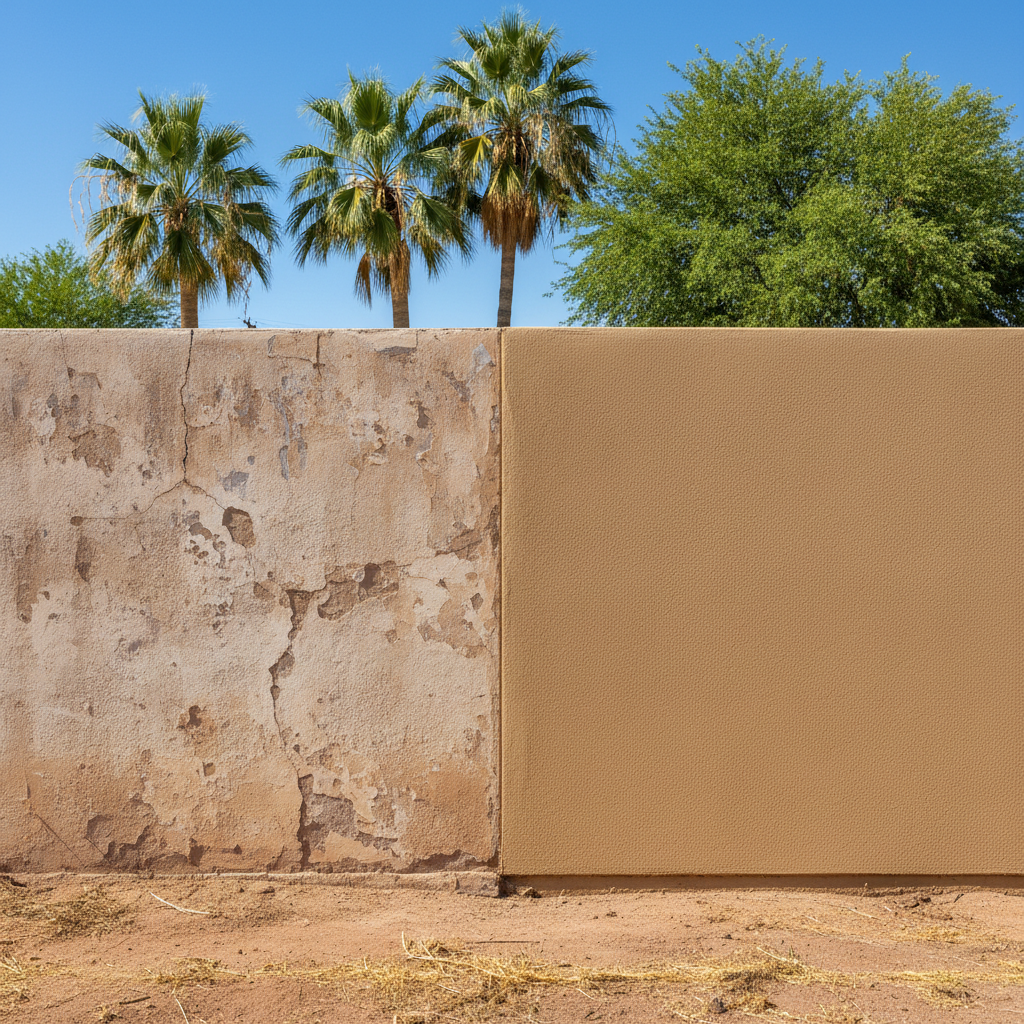
Your stucco's seen better days, right? Maybe it's got some tiny cracks, a few dings, or just looks faded and tired from all that Arizona sun. When you're ready to give it a refresh, you're basically looking at two main ways to redash it: a targeted patch-and-blend job, or a full, new overlay. Both have their place, but they're definitely not the same thing, especially here in Tempe.
Patch and Blend: The Quick Fix
Let's start with patch and blend. This is pretty much what it sounds like. We find the specific spots that are damaged — maybe some cracks, a place where the kids hit it with a ball, or where the paint's really peeling. Then, we fix those sections. After that, we try our best to blend the new stucco's texture and color with the wall that's already there. It's kind of like patching a hole in your drywall and then painting over it, but, you know, with stucco.
The big plus? It's cheaper. Usually, it costs a lot less than doing the whole house. You only pay for materials and the work needed for the specific areas that need attention. It's also faster. We can often get in and out in a day or two, depending on how bad the damage is. If your stucco is generally in good shape, but just has a few isolated problems, this can be a decent way to make it last longer and look better without spending a fortune.
But here's the catch, especially with our intense Tempe sun. Blending new stucco to old is tough. Even if we match the color perfectly today, the old stucco has years of sun exposure, dust, and grime built up. The new patch hasn't. Over time, those patches can become noticeable again as the new material weathers differently. You might end up with a checkerboard effect, or at least visible seams. It's a bit like trying to match a faded pair of jeans with a brand new patch — it's never quite seamless. This is especially true if your home has a more complex texture, like a skip trowel or lace finish. Replicating those perfectly in small sections? Hard.
Full Overlay: The Complete Refresh
Now, a full overlay, sometimes called a recoat or a skim coat, is a whole different ballgame. With this method, we're not just fixing spots. We're putting a brand new, thin layer of stucco — often a finish coat — over the entire existing stucco surface. Think of it as giving your house a fresh, new skin.
The benefits here are pretty clear. You get a completely uniform look. No more trying to blend old and new; everything is fresh and consistent. This means it looks much better, and it's going to hold up better over time because the entire surface weathers evenly. It also adds another layer of protection to your home, which is always a good thing in our crazy Arizona climate. That extra layer can help prevent minor cracks and improve overall durability.
Durability is a big one. A full overlay essentially resets the clock on your stucco's finish. It's like getting a brand new topcoat. This is particularly important for homes built in the 70s or 80s in neighborhoods like Papago Manor, where the original stucco might be showing its age and could really use a complete refresh to protect the layers underneath.
Of course, there's a trade-off. Cost is generally higher because you're covering the entire house, not just a few spots. It also takes longer, usually several days, depending on your home's size and the prep work involved. We've got to make sure the existing stucco is clean, sound, and properly ready for the new layer to stick correctly. But for a truly long-lasting, beautiful finish, it's often the way to go.
My Recommendation for Tempe Homeowners
Honestly, for most homes here in Tempe, especially with our intense sun and monsoon season, I usually lean towards a full overlay. The patch-and-blend approach often ends up being a temporary fix that leaves you wanting more down the road. You spend money, and you still don't get that fresh, uniform look you were probably hoping for. The sun here is brutal; it fades colors and highlights imperfections like nothing else.
A full overlay, while a bigger upfront investment, gives you a much better return in terms of how it looks, how long it lasts, and just knowing it's done right. You get a consistent color, a fresh texture, and a renewed protective layer for your home. It's the difference between putting a band-aid on a problem and actually fixing it right.
Now, if you're selling your house next month and just need to spruce up a couple of glaring spots for curb appeal, a patch and blend might make sense. But if you plan on living in your home for years to come and want your stucco to look its best and last, a full overlay is almost always the smarter move. Come by Tempe Stucco & Plastering, and we can take a look at your place and give you an honest assessment of what makes the most sense for your specific situation.