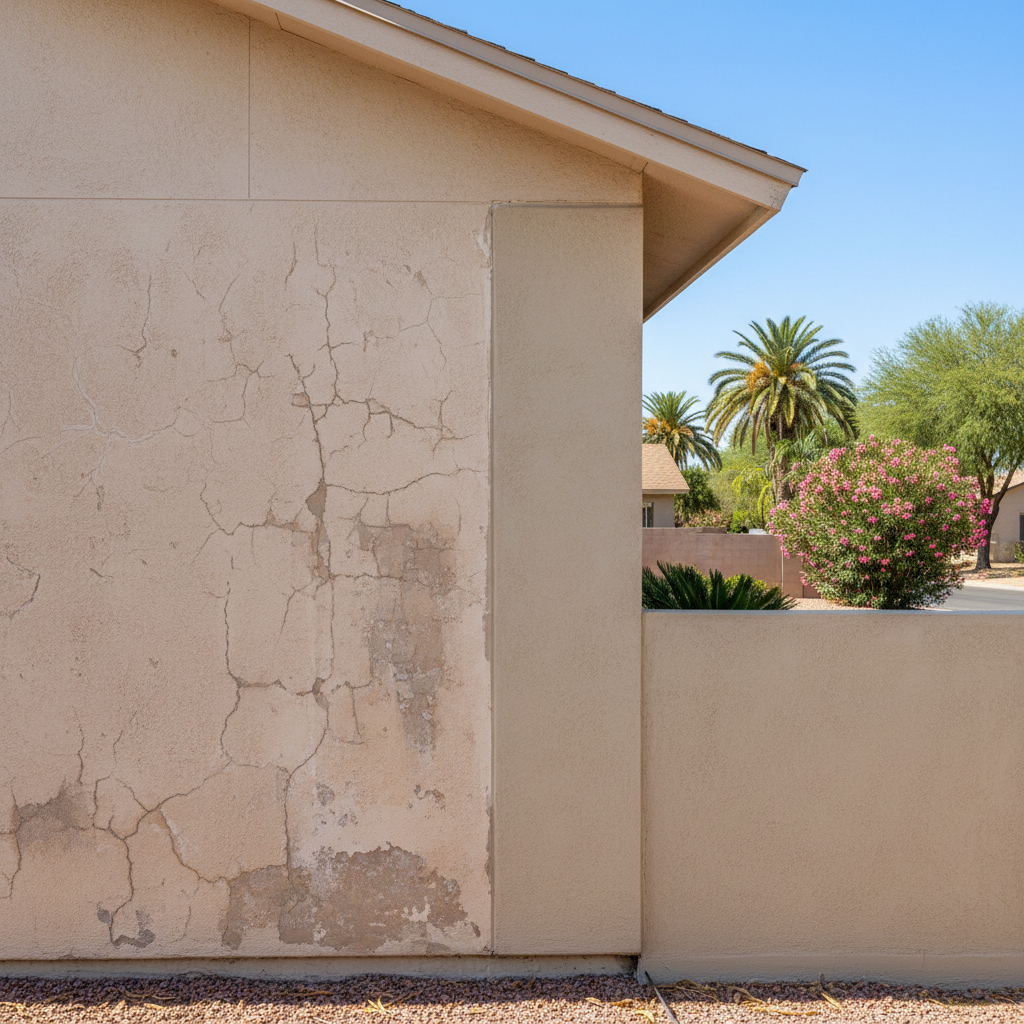
Alright, let's talk stucco replacement. If you're a homeowner in Tempe, you've probably seen your stucco take a real beating from that brutal Arizona sun and our wild monsoon storms. When it's time to give your home's exterior a facelift, you've really got two main options to think about: a full tear-off or an overlay (sometimes folks call it re-stuccoing right over the old stuff). Both methods have their good points and bad, and what works for your neighbor might not be the best fit for you. I'm here to give you the straight scoop, no fancy words, just the facts.
Option 1: The Full Stucco Tear-Off
This is pretty much what it sounds like. We come in and completely strip away all the old stucco, getting right down to the original building paper and sheathing. It's definitely a messy job, no two ways about it – dust, debris, the whole nine yards. But here's why it's often considered the best approach, especially for homes out here in the desert.
Cost
Let's be honest, a full tear-off usually costs more upfront. You're paying for extra labor to handle the demolition, haul away the debris, and then install a brand-new, multi-coat stucco system from scratch. Think of it as a total exterior makeover. For a 2,000 sq ft home in Tempe, a complete stucco siding project could set you back anywhere from $14,000 to $24,000. That range depends on how complicated the job is and the kind of finish you pick. It's more expensive because you're starting fresh, making sure everything underneath is solid.
Durability
This is where tearing everything off really shines. You get a completely fresh start, a brand-new, properly installed system built from the ground up. When we peel everything away, we can check the sheathing, the framing, and all the flashing around your windows and doors. This step is super important because it lets us find and fix hidden problems like dry rot or termite damage that you'd otherwise never even know were there. If the original stucco failed because of bad installation, we fix those issues too. A new system, put in correctly, can easily last 50-70 years, maybe even longer in our dry climate if you keep up with it.
Maintenance
Just like any new stucco, keeping it clean regularly and fixing cracks quickly are key. But since it's a new system, you're starting with a clean slate. Initial maintenance is pretty minimal, and you won't be dealing with problems inherited from an old, compromised layer. You'll still need to reseal your stucco every 5-10 years, though, to keep it looking its best.
Appearance
Absolutely perfect. You get a perfectly smooth, consistent finish, precisely how you want it. There's no