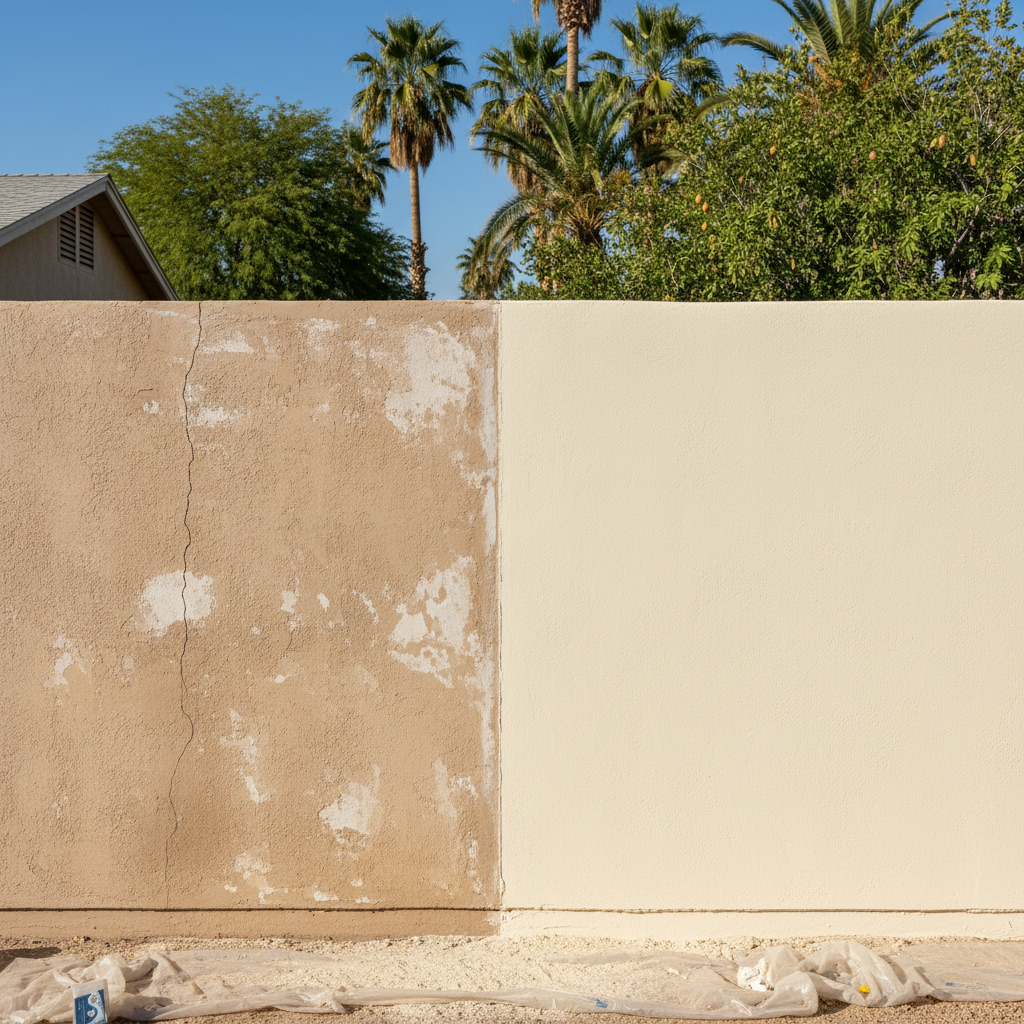
Alright, so you're thinking about stucco for your place here in Tempe. Good choice. Stucco's a classic for a reason, especially with our desert climate. But when you start looking into it, you'll quickly realize there isn't just one kind. You've got traditional stucco, sometimes called hard coat, and then there's synthetic stucco, which most folks know as EIFS (Exterior Insulation and Finish Systems).
Which one's right for your home? That's a question I get a lot at Tempe Stucco & Plastering. Let's dig into the real differences so you can make an informed decision.
Traditional Stucco: The Tried and True
Traditional stucco is what most people picture when they think of stucco. It's a mix of cement, sand, lime, and water, applied in layers over a wire lath. This stuff has been around for centuries, and for good reason. It's tough as nails, literally.
- Cost: Generally, traditional stucco is a bit less expensive upfront than synthetic. The materials are simpler, and while it's labor-intensive, it doesn't require the same specialized installation techniques as EIFS. You're looking at a solid investment without breaking the bank right off the bat.
- Durability: This is where traditional stucco shines. It's incredibly durable and resistant to impact. If you've got kids playing ball in the yard, or just want something that can take a beating, traditional stucco holds up really well. It's also fire-resistant, which is a nice bonus.
- Maintenance: Pretty low maintenance. You'll want to keep an eye out for cracks, especially hairline ones that can pop up with our extreme temperature swings here in the Valley. If water gets in, it can cause problems down the line. But overall, it's a wash-and-go kind of exterior.
- Appearance: Traditional stucco has a classic, hard, masonry feel. It can be finished in various textures, from smooth to rough, giving your home that authentic Southwestern look that's so popular in neighborhoods like those around Papago Park.
Synthetic Stucco (EIFS): Modern & Efficient
Synthetic stucco, or EIFS, is a different animal altogether. It's a multi-layered system that starts with an insulation board (usually foam), which is then covered with a base coat, a fiberglass mesh, and finally, a finish coat that looks like traditional stucco. It's a more modern approach to exterior cladding.
- Cost: Expect to pay a bit more for EIFS upfront. The materials are more specialized, and the installation process is more intricate, requiring trained installers. However, you might see long-term savings on your energy bills, which can offset that initial cost.
- Durability: EIFS is incredibly flexible, which means it's much less prone to cracking than traditional stucco. That flexibility helps it handle our intense Tempe sun and the expansion and contraction that comes with it. It's also very impact-resistant, often more so than traditional stucco, especially the newer 'hard coat' EIFS systems.
- Maintenance: Similar to traditional stucco, it's relatively low maintenance. The key with EIFS is proper installation and sealing, especially around windows and doors. If water gets behind the system due to poor flashing or sealants, it can lead to serious issues because the foam board can trap moisture.
- Appearance: EIFS offers a huge range of colors and textures, often even more variety than traditional stucco. It can mimic the look of traditional stucco perfectly, but because it's applied over foam, it can also create more elaborate architectural details and shapes that are harder to achieve with traditional methods.
My Recommendation for Tempe Homeowners
So, which one should you go with? For most homes here in Tempe, especially with our intense heat and the occasional monsoon downpour, I lean towards synthetic stucco (EIFS), with a big caveat.
The main reason is its superior insulation properties. That foam board isn't just for looks; it's a fantastic thermal barrier. In a place where your AC runs for half the year, anything that helps keep your home cooler and your energy bills down is a winner. Plus, its flexibility means fewer cracks from our extreme temperature fluctuations, which is a common headache with traditional stucco in this climate.
Now for the caveat: installation quality is paramount with EIFS. If it's not installed perfectly, with proper flashing and sealants, you can have water intrusion problems. That's why choosing a reputable contractor like us at Tempe Stucco & Plastering is so important. We know the ins and outs of both systems and, more importantly, how to install them correctly for our specific Arizona conditions.
Traditional stucco is still a fantastic, durable option, especially if you're on a tighter budget or want that classic, hard-coat look and feel. But if energy efficiency and crack resistance are high on your list, and you're working with a pro who knows their stuff, EIFS often comes out ahead for our desert homes.
Ultimately, both are great choices. It just comes down to your priorities and making sure you've got the right crew putting it on your house.